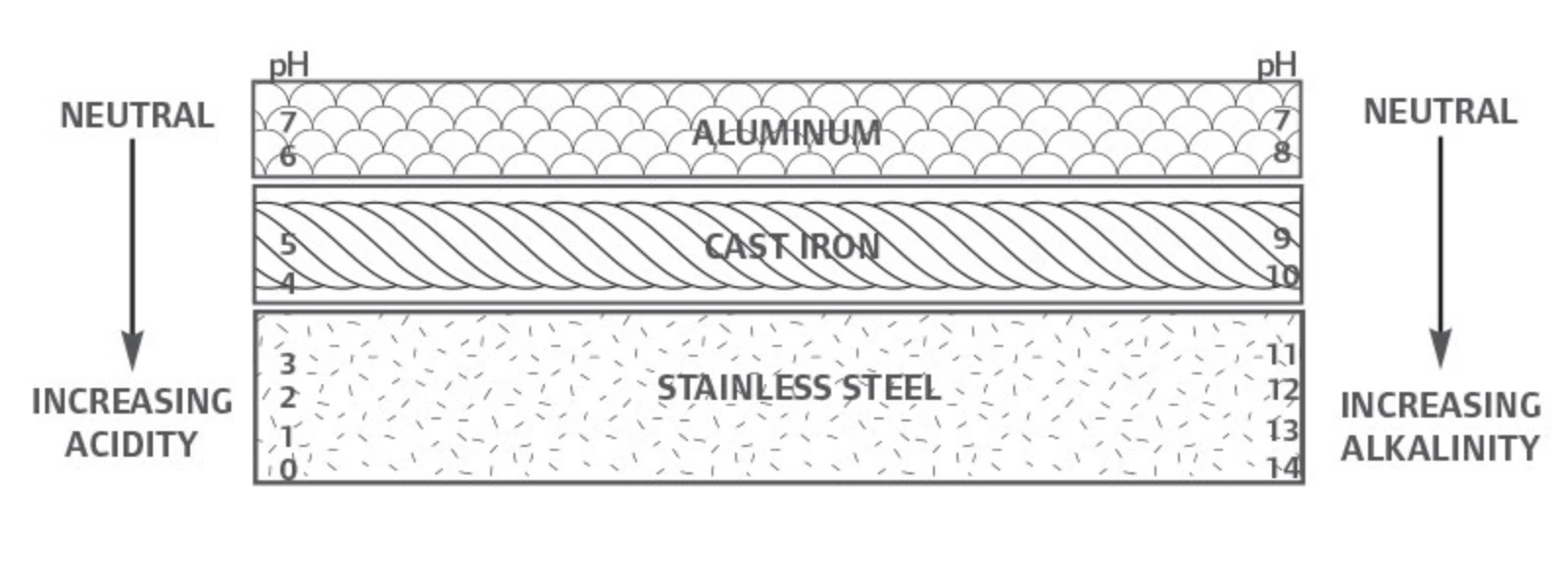
Chemical Compatibility Guide
ARO is pleased to present this selection guide to provide a convenient and informative reference tool for diaphragm pump and piston pump selection. This guide was compiled from information provided by material suppliers and manufacturers.
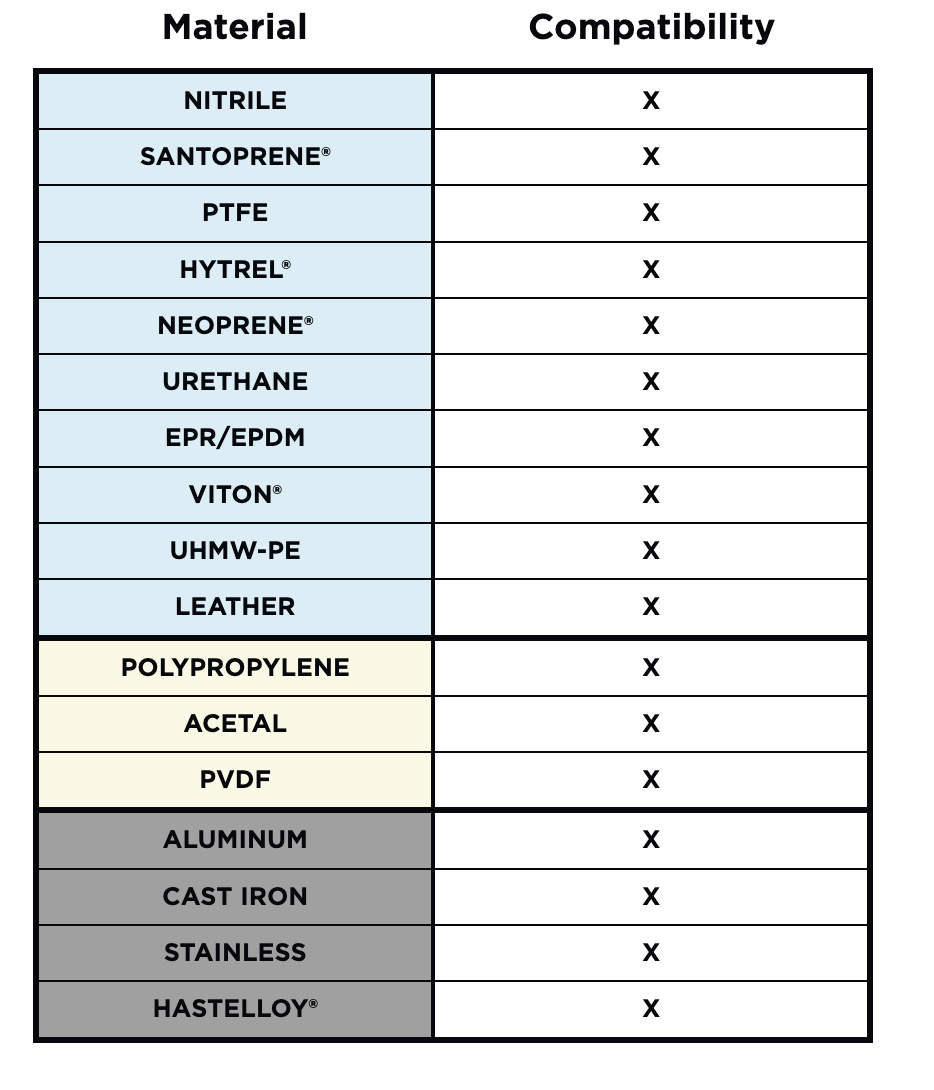
A = Excellent, B = Good, C = Fair to Poor, D = Not recommended
X or Brackets around a rating letter indicate that no data is available, but the ratings are made on the basis of exposure test in similar chemical groups.
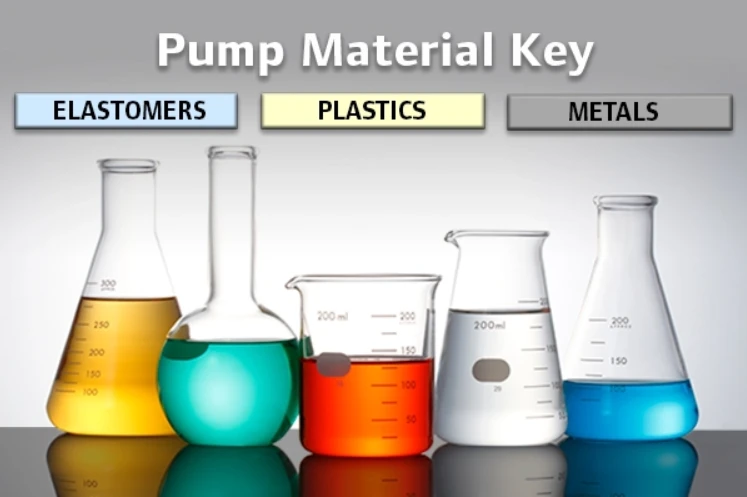

The chemical compatibility listings are intended as a guide only.We assume no liability for the accuracy of their use. The usershould test under their own operating conditions to determine thesuitability of any compound and material in a particular application.
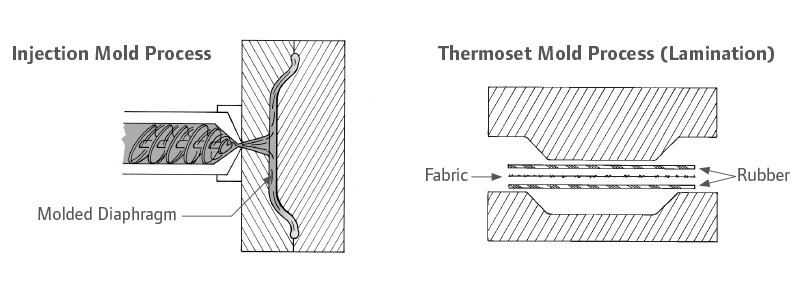
ARO is moving toward replacement of traditional thermoset rubberdiaphragms with thermoplastic elastomers (TPE). Examples of TPEsinclude Santoprene®, Nitrile (TPE) and Hytrel®.TPEs are manufactured using a plastic injection molding process wherethe resin, or diaphragm material, is melted and injected into a moldto produce the diaphragm. The advantages of this process include:
<table>
<thead>
<tr>
<th>Features</th>
<th>Benefits</th>
</tr>
</thead>
<tbody>
<tr>
<td>Diaphragm is molded to optimum shape</td>
<td>Excellent flex life</td>
</tr>
<tr>
<td>Homogenous part</td>
<td>No delamination failures</td>
</tr>
<tr>
<td>High performance resins</td>
<td>Chemical</td>
</tr>
</tbody>
</table>
Laboratory testing has shown:
Santoprene® outperformed all rubber diaphragms exceptBuna in the mild abrasive fluids. The Geolast diaphragm had equivalentlife to the Buna diaphragms and was superior to the other rubberscompounds. PTFE with the Santoprene® backer exhibited thebest flex life of all diaphragms during the test series.
Polytetrafluoroethylene (PTFE)
PTFE is the most chemically inert man-made compound known. Newdiaphragm design and material processing have significantly improvedflex life, which is now equivalent to or exceeding rubber compounds. Abacker diaphragm is used to provide additional support.
* Not Available in all models
**Maximum temperaturelimits are based on mechanical stress only. Certain chemicals cansignificantly reduce the maximum safe operating temperature.