
Products
Pneumatic Diaphragm Pumps
Electric Diaphragm Pumps
Piston Pumps
Filter Regulator Lubricators
Lubrication Equipment
Pneumatic Valves & Cylinders
Services
Technologies
How Diaphragm Pumps Work
How Do Powder Pumps Work
Electric Diaphragm Pumps: An Overview
Piston Pumping Fundamentals
Piston Pump Motor Technologies
Support
Diaphragm Pump Selector Tool
Chemical Compatibility Guide
Blog
ARO Product Park
On-Demand Webinars
Knowledge Hub
Document Library
AODD Manufacturer Comparison Guide
Markets
General Manufacturing
Chemical Transfer
Data Centers
Lubrication
Energy
Food & Beverage
Mining
Other Industries

In recent years, the rapid growth of the new energy industry has accelerated the evolution of lithium-ion battery materials. From lithium iron phosphate and silicon-based anode materials to conductive slurries and nanomaterials, the demand for higher battery performance continues to rise.

As a result, a previously overlooked challenge is becoming increasingly apparent: slurry transfer processes are facing ever-higher requirements for stability and reliability.

How Is Lithium Battery Slurry Transfer Evolving?

In the past, lithium battery slurry transfer was primarily focused on one question: Can the slurry be transferred effectively?

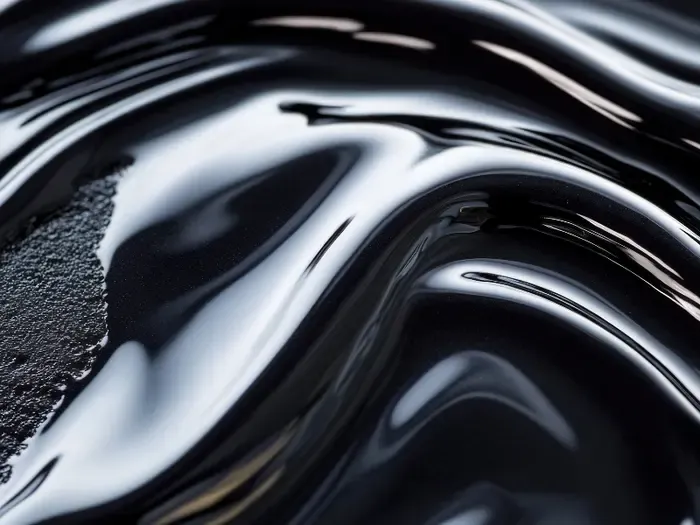
Today, with the rapid development of lithium iron phosphate (LFP), NCM cathode materials, conductive slurries, carbon nanotubes (CNTs), and silicon-based anode materials, battery slurries are becoming increasingly characterized by high solids content, high abrasiveness, high value, and extreme sensitivity to contamination.

As a result, transfer systems must do more than simply move material from one process to another. They must ensure that the slurry remains stable throughout the entire transfer process, preventing contamination and preserving its structural integrity.

For sand mills, feed stability is directly linked to the final grinding performance.

Any fluctuation in slurry feed can reduce grinding efficiency and production capacity. In more severe cases, it can lead to inconsistent particle size distribution, compromise product uniformity, and even result in the rejection of an entire production batch.
Why Are Traditional Feeding Solutions Struggling to Keep Up?

For many sand mill manufacturers, early systems typically relied on centrifugal pumps or screw pumps for slurry feeding. However, as lithium batteries continue to evolve toward higher energy density and higher solids content, next-generation battery slurries are placing increasingly demanding requirements on feeding systems. Traditional solutions are beginning to reveal several limitations:

01 ) Struggling to Meet Strict Copper and Zinc Control Requirements

The copper and zinc content in non-wetted components must be controlled below 1%, while wetted components must contain less than 0.5%, placing higher requirements on the materials used in feeding equipment.

02 ) Accelerated Wear from Highly Abrasive Slurries

Centrifugal pumps operate at high flow velocities, causing particles within the slurry to continuously erode the pump casing and mechanical seals. This can lead to accelerated wear and premature seal failure, with service life potentially reduced to just a few months or even weeks. The resulting wear not only rapidly degrades hydraulic performance but also increases spare parts replacement frequency and unplanned downtime.

03 ) Increased Risk of Seal Leakage and Higher Maintenance Costs

In high-viscosity and highly abrasive applications, conventional mechanical seals are more susceptible to wear and leakage, leading to increased maintenance requirements and higher operating costs.

How Does ARO Solve Slurry Transfer Challenges?

AODD Diaphragm Pumps Meet the Technical Requirements of Lithium Battery Slurry Transfer

  • Strict copper and zinc control requirements: Less than 1% Cu/Zn content in non-wetted components and less than 0.5% in wetted components.
  • Available in stainless steel, polypropylene, and other material options to handle corrosive media.
  • Capable of safely transferring clean fluids, abrasive suspensions, and mixed media.
  • No dynamic seals for safe and reliable operation.
  • Low shear, gentle pumping.